 Africa
 Americas, North
 Americas, South
 Asia
Asia Europe, Western
 Europe, Eastern
 Oceania
 Best Airports
 Worst airports
 Alternatives to Smoking
 Contact
 Ratings
 Submissions
 Share
Share Vaping Bans
Smoking at Zanzibar, Abeid Amani Karume International Airport (ZNZ)
Airport Rating

Before Security Smoking
Smoking is only permitted in designated areas outside the terminals.
After Security Smoking
Terminal 1
Inactive
Terminal 2 (Domestic)
Update from Rene, December 2022: There is a smoking lounge in the mainly domestic terminal 2: Right after security control, turn left to the little store. Consumption required, water is 1.50$ and coffee available from 2$

There are no smoking facilities inside the terminal, after the initial security check. Which is before passport control. No smoking area after either. Feedback from Daniel S on the 10th October 2017.
Terminal 3 (International)
2024, October update from Jurek: Smoking lounge near Gate 5, photos below.
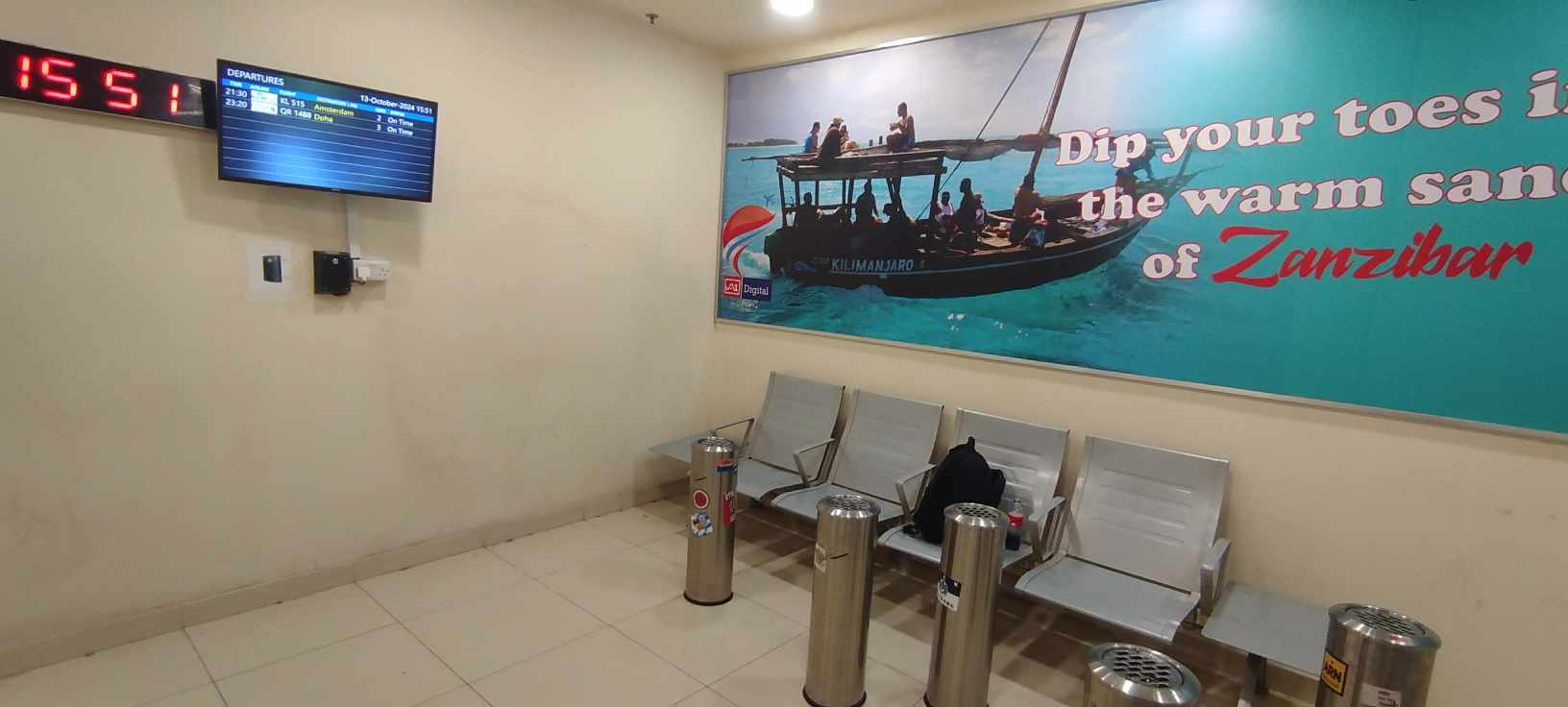


Update from Michael K., August 2022: Zanzibar, Tanzania, Terminal 3, small but free smoking lounge next to Gate 5. No need to buy something at shop as previously indicated! Photo below:

Update from Zsuzsa, Marh 2022. Zanzibar international airport has a smoking lounge. You need to buy something at their shop and you can smoke.
Further Information
Zanzibar is a semi autonomous Tanzanian archipelago in the Indian Ocean, made up of many small islands and two major ones Unguja (commonly called Zanzibar Island) and Pemba. Its capital, Zanzibar City, is home to Stone Town, a UNESCO World Heritage Site known for its narrow alleys, coral stone buildings, and rich blend of Arab, Persian, Indian, and African influences. Historically a major hub in the spice trade, Zanzibar is still famous for producing cloves, nutmeg, cinnamon, coconut, and black pepper, earning it the nickname "The Spice Islands." The region's economy today is driven by spices, raffia, and a rapidly growing tourism sector, which expanded from about 19,000 visitors in 1985 to over 376,000 by 2016. Its unique wildlife including the Zanzibar red colobus and the rare Zanzibar servaline genet along with its marine ecosystems, contribute to both ecological importance and environmental pressures, especially from tourism and climate related sea level rise.